Someone’s Been Indoctrinating Your Customers…

Who decided breakfast is the most important meal of the day?

Have you seen scientific proof?

Don’t Google it. Take a moment and search your memory.

No one proved this claim to you… but there’s a good chance you accept it as truth.

What happened is this: you heard this statement early in your life… you heard it often… and from authority figures.

Maybe you never questioned it. (Most people don’t.)

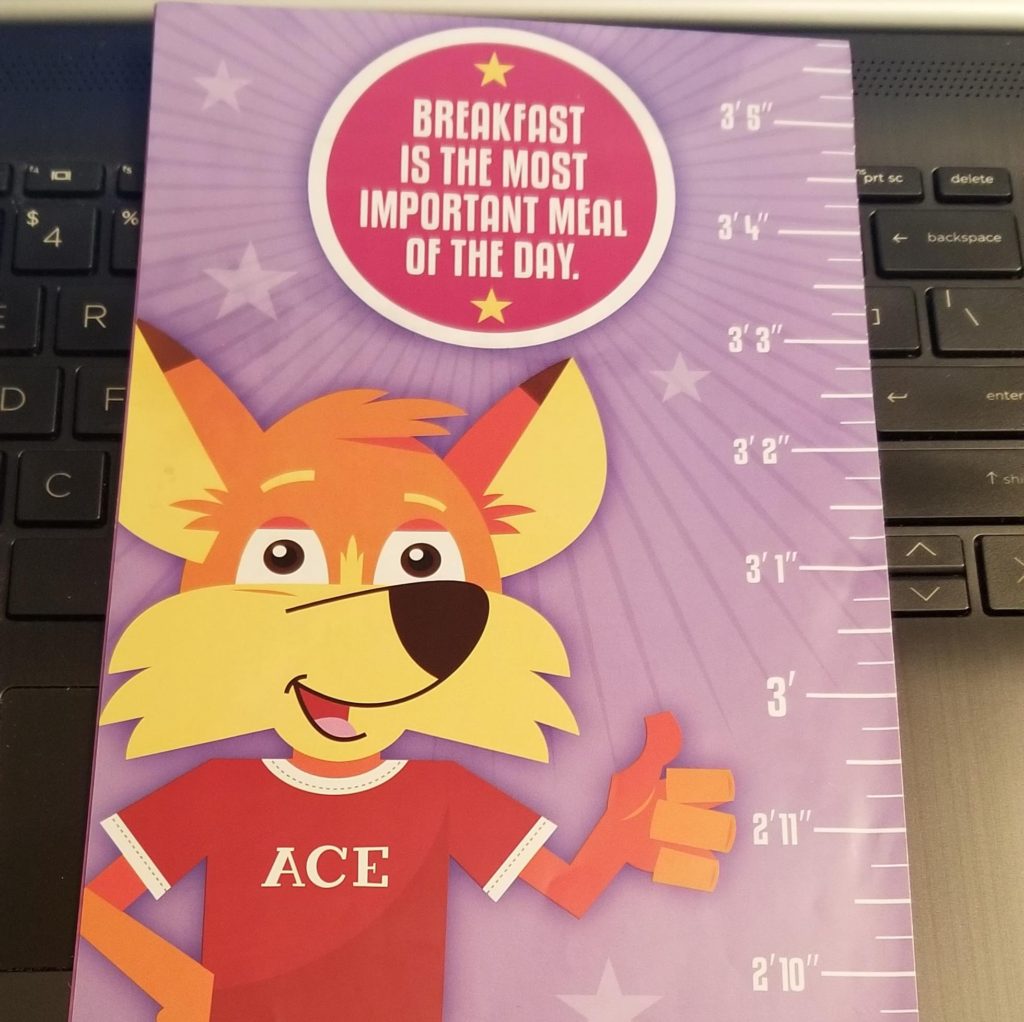
I was shocked when my youngest son brought this chart home from school…

… because this is not education. It’s indoctrination.

And — cue exaggerated rage — who are these people to tell my son which meal is most important????

(As you might have guessed, the chart came from the vendor that sells lunch to our school district. Trying to grab a bigger share of the 8am market.)

I’m sure most parents didn’t think twice about it. Why should they? It lines up nicely with what they learned in school. 

There’s a useful persuasion principle at work here:

Someone is indoctrinating your children… and your prospects. It might as well be YOU.

The success of your business depends on the success of your indoctrination efforts. You must either:

  • successfully indoctrinate your should-be buyers — to define how they think about or make decisions in your area of expertise, or…
  • align your message with the indoctrination that’s already in place.

If your marketing or sales pitch has to convince someone that breakfast isn’t the most important meal of the day, you’re in trouble.

It’s worth spending time to find out what your ideal clients already believe (and why), and what they NEED to believe in order to make your product or service the obvious choice.

Time to do your research!

Here’s what I want you to do:

1) Always Be Indoctrinating. Otherwise, you could lose ground to the other voices trying to compete with you.

2) Build yourself up as an authorityThat puts oomph into your statements, neutralizes some degree of skepticism/criticism and helps your message “stick.”

Don’t just BE an authority. Be KNOWN as one.

3) If necessary, re-position your product/service/self so it’s in a category all by itself.

When people see something familiar, they automatically put it into a category — and that category almost certainly has someone else’s indoctrination already installed.

When you create a new category, you get to set definitions “early… often… and as the authority figure.”

Have a productive weekend!

P.S. How does one go about this business of indoctrination? In my next article, I’ll fill you in.

“No, YOU have a consistency problem”

copywriting consistency habits

Habits are hard to break. Harder than freezer meat.

That’s one of the reasons marketing can be hard work.

The difficulty of a marketer’s job is rooted in the dark nature of habitual behavior.

The habitual behavior of your should-be buyers, to be specific.

Let me explain what I mean.

You’ve probably read Robert Cialdini’s book, Influence — or you’ve at least heard of it. So you’re probably familiar with the principles of commitment and consistency.

People like to be seen as consistent. They want to feel consistent.

Marketers try to leverage that fact by seeking “micro-commitments” and “progressive series of agreement.”

There’s value in those concepts.

But listen…

These are attempts to produce consistency. The truth is, your prospects are already consistent.

Freezer meat consistent.

Therein lies the problem — and the opportunity.

Your potential customers are consistently, habitually doing the same things over and over again.

Buying the same things over and over again.

If they’re buying from you, hallelujah! If they’re buying from the other guy… ouch.

More than that, they’re avoiding doing the same things over and over again — and consistently rejecting the same kinds of offers.

So, let me ask you a couple questions:

1.
Do you think it’s smarter to get someone to micro-commit their way to consistently buy from you…

Or should you target people who are already consistently buying the types of products you sell?

2.
Should you spend all your time chasing new customers and weeding out the ones who stubbornly refuse to commit to what’s clearly the best option for them?

Or does it make sense to focus on (or develop) hyper-responsive buyers who already have habits that make you say “Hallelujah”?

Think about it.

Then do something about it.

3 Persuasion Lessons You Won’t Find in Copywriting Books

stack of copywriting books

“What’s the biggest mistake copywriters make that destroys their conversions?”

When I’m out speaking, doing workshops or online trainings, that’s one of the questions that comes up almost every time. 

It’s hard to give just one ultimate copy faux pas. There are so many… and they can be extremely costly.

Some are obvious:

  • Focusing on your company or product instead of your prospect
  • Writing about features instead of benefits
  • Using technical jargon and stuffy, corporate language when you should write conversationally.

Other mistakes are much less obvious. I want to talk about three of them today. 

You’re not likely to find these mentioned in copywriting books. In fact, you probably won’t learn about them in many higher-priced courses, either. 

They’re hard won on the battlefield of direct response… where seemingly small slip-ups can cost hundreds of thousands or even millions of dollars in lost revenue.

Why is no one teaching these persuasion lessons? 

Because they’re not sexy. And they’re not easy to sum up in tweet-sized sound bites. 

But if you’re willing to dig a little deeper than most of your peers, this hidden wisdom can change everything for you.

Lesson #1: Your USP’s Magnetic Power Doesn’t Come From You

Copywriting and general marketing books often make a big deal out of finding and communicating your unique selling proposition (USP) or unique value proposition. And rightly so. Establishing your business, product or service as unique in the marketplace is important. 

But we’ve tried to make USPs simple, even mechanical.

A + B = C

Target Audience + Problem + Solution = USP

In the process of making formulas like these, marketers have completely missed the point.

No matter what it seems like, the most important characteristic of a USP isn’t its uniqueness. Customers don’t buy a product simply because it’s different.

Today, there are more options than ever before to solve every conceivable problem or satisfy any desire. 

People buy because a product or solution is uniquely suited to fulfill their specific desire.

A USP is not what’s magnetic. The attraction comes from within the would-be buyer himself.

To quote psychotherapist Anthony de Mello, “We see people and things not as they are, but as we are.

Customers see your products as THEY are. Their desires and beliefs dictate how they perceive your business and your USP.

Here’s what that means for you. 

When writing sales copy, it’s usually a mistake to spend too much time focused on what you (or your client, as the case may be) think is unique about the product.

It’s far more powerful to highlight that specific need or desire that drives your ideal customer into the market in the first place. 

Write copy that awakens that desire… that shows them you understand that pain at a deep level. This helps the reader convince himself that what you’re offering is uniquely suited for his situation. 

Force-feeding your “one of a kind” product is more likely to create magnetic repulsion — the exact opposite of what you’re trying to accomplish.

Lesson #2: Copy Should Empower Readers (Even If the Message Starts With Negative Emotions)

You may already know the fear of loss is emotionally twice as powerful as the positive anticipation of gain.

That’s one of the major reasons fear-based copy can be so effective. When done well, it grabs attention, earns buy-in from the reader and prepares them for the hope of salvation… in your product or service.

Many entrepreneurs shy away from the negative stuff in copy. They don’t want to be fearmongers and scare potential buyers away.

Big mistake. 

Those businesses lose out on sales — and they allow readers to underestimate the severity and imminence of the problems they face. 

That being said, you can go too far with fear and pain

Rather, fear and pain are great for opening copy and when you’re closing the sale (fear of missing out)…

But in the middle of the message, we’ve found it boosts response to add empowering content to the main body of the sales piece. 

One of the most effective ways to empower your reader… to make it easier for him to take the next step toward his desired outcome… is to add an educational element to your copy.

In my own split testing, I’ve seen conversions jump as much as 25–40% by providing valuable tips, actionable recommendations, etc., right in the sales message instead of just “selling.”

Other great copywriters, including the legendary Gary Bencivenga, have reported similar results. 

If the reader benefits just from reading the marketing message, you’ve made the sale before the sale.

Quality educational content…

  • Establishes you as an authority on the subject
  • Differentiates you from peddlers who only care about making the sale and
  • Begins to demonstrate to the reader that HE CAN DO THIS, that this can actually work for him.

When you’ve done it right, a sense of hope may begin to form in the reader’s mind: hope that the result he imagines can finally become reality.

In so doing you win an important victory — and the long-term benefits accrue for both you and your reader.

Lesson #3: The “Who” Matters More Than the “What”

I hope the overstatement here is obvious. 

The most important characteristic of sales copy is that the product or service being promoted is something prospects actually want to buy.

But more than most marketers and entrepreneurs realize, the person the message is coming from is often a powerful sales multiplier.

You need to be the kind of personality your readers like. Someone they want to be around and hear from.

Someone they want to buy from. 

Think about celebrities the media are obsessed with. The ones whose faces are on magazine covers everywhere you go. A big percentage of the population drops whatever they’re doing to pay attention to these personalities.

You can give your readers a chance to become THAT interested in you. 

Put your unique idiosyncrasies on display. 

Show the reader you share certain values, i.e., you’re in the “same club.” That kind of affinity is one of the best shortcuts for writing persuasive sales copy.

This is why many financial newsletters come from a conservative or libertarian perspective.

The newsletter audiences tend to be older and more conservative, so the copy speaks that language. 

As divisive as politics can be, it can bond people together like Gorilla Glue when you’re on the same side. 

That sort of affinity turbocharges copy. It’s hard to teach that in copywriting books because different audiences have different affinity hooks.

It’s your job as a copywriter and marketer to find them.

When you share values in common (or at least appear to), when you’re on the same side and when you’re promoting a product or service that’s uniquely suited to scratch the itch that’s been driving your reader crazy…

… the sales copy feels more like a conversation between friends than anything else. 

This can skyrocket sales today (front and back end) AND increase loyalty over time. Even if the reader doesn’t buy from you today, he’s much more likely to keep reading your adventures whenever you send them out. 

By earning this loyalty, you get to sell to the reader time after time. More sales conversations equal more sales. And yet it feels less like selling to the reader.

Dive in and Reap the Benefits

These concepts don’t necessarily work with fill-in-the-blank templates. They require some customer research… and some creative thinking on your part. 

But I can tell you, based on tens of millions of dollars in products sold, these lessons can make all the difference in the world.
One Little-Known Key Unlocks Your Influence

Unlock Influence

There’s one pain point every single one of your would-be customers is painfully aware of:

The pervasive complexity of life in the 21st century.

Whether they use these words or not, every one of them craves more simplicity in some area of his or her life. (Or more likely, almost every part.)

Your mission, should you choose to accept it, is to be a simplifier in your area of awesomeness.

Do that — and communicate it well — and your power to influence will stun you.

Keep in mind, there’s an important difference between simple and easy.

For example, “97 Easy Ways to Save Money” is NOT simple.

There may be a ton of value there. Someone who has tried everything may still find a new idea worth trying among the 97.

But people don’t want 97 ways to save money, really.

They want 3 ways to save money. Or, better still, the single most effective way to save money… the one trick that will save so much money they don’t have to do anything else.

That’s a bit of an exaggeration, but you get the point.

With that in mind, here are 3 things you can do to increase your simplifier status:

  1) Eliminate the clutter. Your reader has an overwhelming array of options and choices to make in every segment of his. As the expert, you have the ability to tell him which options will give him the best results, and which he can flat-out ignore.

Thinking is hard work; most people avoid it at all costs. If you can earn someone’s trust, he’ll gladly allow you to do some of his thinking for him.

  2) Make fewer recommendations & communicate them with conviction. Again, don’t give people new instructions and new systems every week. 97 ways to do anything is intimidating. Spend most of your time talking about a few powerful ideas. Come back to them continually.

It’s much easier to trust someone when he seems 100% certain about what he’s recommending. So speak with conviction!

Here’s the one we really want you to grasp. This is single most important thing you can do establish yourself as a simplifier for your audience.

entrepreneurs mission copywriting

  3) Establish a core “operating system” or personal philosophy.

Your followers should quickly be able to figure out what you stand for, what you KNOW works.

That means YOU need to know what you stand for. What’s the one phrase you’d like to be known for? Decide on that, then pick a small number of big ideas to revolve around your philosophical core.

Your intense focus will make you unique. More to the point…

  • you’ll be simpler to understand
  • your recommendations will be simpler to follow
  • your “brand” will be simpler to categorize, so you’ll fit into the mind of your readers/listeners/viewers more distinctly
  • your expertise won’t be diluted. Your reader’s mind automatically divides your perceived authority by the number of things you claim to be an authority on. You’ve never heard of a neurosurgeon who’s also an expert heart surgeon.

So the message is simple:

Strive to make your would-be customer’s life simpler (not just easier).

You can do it.

Here’s a helpful analogy:

Kobe Bryant’s Triangle Offense of Copy

The LA Lakers retired my pretend cousin’s jersey last night.

Actually, they retired two jerseys for the two numbers he wore while he played.

Here’s a little trivia for you.

In addition to Kobe’s legendary basketball career, did you know he’s also started and sold an advertising agency… directed many of the Nike commercials he starred in, and is now involved in all kinds of marketing activities for his own company and others?

Yep.

Kobe is likely to go down in history as a Hall of Fame athlete and ad man.

Earlier this year, he spilled the beans on his Triangle Offense of storytelling and copywriting. I’ll let him tell you in his own words:

—–
“The product and the messaging must be one and the same, right? It’s like a triangle approach I take with all storytelling…

1) What is the essence of the product? What is the product here to do? What is the messaging that we want to represent?
2) How can we best communicate that plainly and simply?
3) And thirdly, how do both of those things relate to human nature as a whole?

If those three things align, then I know we have the right messaging.”
—–

It’s hard to beat that simple formula.

Get down to the core, emotional benefits. Share those benefits with clarity as they related to human nature and psychology.

The only thing I would add here is that you can go beyond general human nature and address the specific nature, dreams and desires of your specific target audience.

Of course, Kobe knows that. He just didn’t say it in this interview.

I swore I wouldn’t talk about Trump… (Copywriting Tip #5)

Trump copywriting tip

Quick Copywriting Tip #5: In most cases, you can get away with infuriating 95% of your list/audience in an effort to win over the 5% who are your best buyers and referrers.

Donald Trump is 24 karat gold.

For comedians, journalists, content creators and lovers of funny memes, anyway. Maybe not so much for the American people, or citizens of the world at large.

Marketers and entrepreneurs can learn quite a bit from him, too. Far more than we have time to discuss here.

As the subject line states, I’ve avoided writing about The Donald, but for this Quick Copywriting Tip, I can’t think of a better illustration.

As of 1 hour ago, 60.4% of Americans dislike/despise Trump, according to data aggregated from 171 polls. Just 2 weeks ago, his unfavorable rating was as high as 67.8%.

These are historically BAD numbers for presidential nominees. (Hillary Clinton’s numbers are not much better.)

And yet, he’s amassed the most primary votes of any Republican ever. Voters are taking action. And it’s not because Trump’s trying to appeal to the masses.

Everyone has an opinion about him. According to the polls I mentioned, only 2.6% of people are undecided about him.

Amazingly 3.1% of people are undecided about President Obama because they “haven’t heard enough” to rate him. After over 7 years in office — and a bazillion news stories about him.

What does all this mean for you?

Your customers aren’t looking for people who can “kinda-maybe” solve their problems. They don’t want their lives to be 2% better. They want total transformation – or as close to it as they can get.

They want to start winning. Or win more “yuge” victories.

“… there is one thing you can count on: your family, friends, customers, clients and even everyone you have yet to meet will have these needs met by someone. The only question is, will it be by you?” ~ Blair Warren  (accents mine)

You can’t control who is in the market for what you sell and who isn’t. It’s your job to be the clear-cut choice for a specific someone. That may mean offending someone else in the process.

copywriting tip - attract or repel

That’s cool. Those people are not your ideal customers. There’s a good chance they’d never give you any money anyway.

Watering yourself and your message down to avoid ruffling their feathers means…well, it means that you’re watered down. And that will have an adverse effect on those people who love who you are and what you stand for.

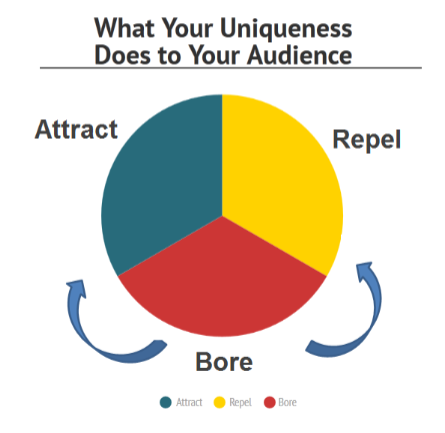
Attract people or repel them. Just don’t be boring! You can’t bore people into buying.

So stand boldly for something — and don’t be scared to be (appropriately) loud about it.

Read all 13 Quick Copywriting Tips

Preaching to the Almost Pitch-Perfect Choir (Copywriting Tip # 4)

copywriting tip - preach to the choir

Quick Copywriting Tip #4: Whenever possible, write to people who are already at least half-convinced.


One of the hardest things in the world to do is convince someone they’re wrong. That their opinions are wrong, the way they’ve been doing something is wrong, etc.

We’re all naturally resistant to change (inertia) —  and we usually don’t like anyone telling us to change course.

In many cases, that’s what we’re doing: telling people they’re wrong and we can “fix” them.

We may be asking someone to change

  • from inaction to action — get off the fence, like we talked about in Tip #3
  • from one course of action to another
  • brands or providers
  • his thinking
  • his habits

Change is hard. So why, when your business/profitability are on the line, are you asking people change?

Perhaps you should start “preaching to the converted” instead.

A good writer is more likely to buy writing resources than a bad one, even though he needs it much less.

A dedicated marathoner (like the guy we talked about in Tip #2) is much more likely to invest in fitness stuff than a couch potato dedicated to Game of Thrones and his Playstation.

I know you mean well. But keep in mind that changing the world (or just one person’s mind!) usually takes a lot more work than helping your “choir” make progress towards its goals.

Your ideal clients are not necessarily the people who need what you offer the most. They’re the ones who KNOW they need it and/or want it badly and are willing and able to pay for it.

Share your message with those people. Become a visible expert where they congregate. And continue growing your own audience (mailing list) of people who don’t need convincing.

It’ll save you a lot of energy and headache — and probably make you a lot more money.

Check out all 13 Quick Copywriting Tips.


Here’s an example of a fantastic argument that hits home on both the intellectual and emotional levels… but is largely pointless. Ta-Nehisi Coates trying to “sell” the idea of reparations for African-Americans… to a Congress that couldn’t care much less about the subject. 

Desperate Times, Desperate Measures (Copywriting Tip #3)

copywriting tips

Quick Copywriting Tip #3: Force your reader to “pick a side.” Don’t allow him to sit comfortably on the fence.

They say “desperate times call for desperate measures.”

“They” are wrong. Desperate measures are always called for. More accurately, they’re almost always necessary.

Why? Because most of your should-be customers, the ones who desperately need your product or service, are sitting on the fence. I guarantee it.

A small percentage of prospects will buy with minimal effort on your part. Most of them take more work. It’s your job to lead them into making the smartest decision.

You can’t lead them anywhere while they’re sitting up there, can you? You’re going to have to push/pull them down.

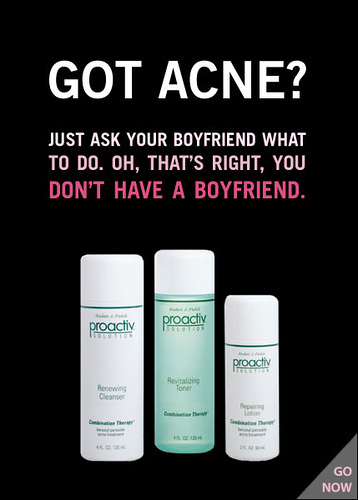
Here’s an example you’re probably familiar with: Proactiv Solution. If you’ve seen the TV commercials, magazine inserts, online banner ads and who knows what else, you know they use every tool in the shed to make you choose:

  • up-close before and after photos that remind you of the pain you feel and offer relief
  • celebrity spokespeople to grab your attention and win your trust
  • clinical research for credibility
  • showing up in your face every day, in as many places as possible
  • storytelling which push emotional hot buttons like embarrassment, guilt, and even the shakiness of your romantic life (see below)

Proactiv emotional copywriting tip

Your message should repeatedly attempt to force your audience to pick a side.

Struggle with the problem, or choose the solution.”


Does Proactiv play dirty? Maybe. But they believe their cause is a righteous one. They believe they’re improving people’s lives — and providing jobs in the process.

The cost is too high to be soft-spoken.

Check out all 13 Quick Copywriting Tips

Selling Lessons from the Trenches: Interview with ClearSales

Selling is a transfer of enthusiasm from one person to another.

This is one of the common definitions of selling — and it’s a good one. It’s the job of the salesperson to connect the inherent benefits of a product or services with the needs and desires of the potential customer. For the buyer, getting what they want is something they can get excited about. The person doing the selling oftentimes has to find the enthusiasm-inducing elements and bring them to the top. And the more impassioned he is about those benefits, the more persuasive his presentation will be.

We’re all selling something. We might as well get good at it.

Last month, Ash Patel over at ClearSales interviewed me about big lessons I’ve learned selling products and services face-to-face and through the written word. I answer sales-related questions for people who find themselves in selling situations but don’t always think of themselves as salespeople.

The interview lasts 40 minutes:

You can take a look at the raw transcripts in the ClearSales blog.

Ash delineated 11 separate takeaway lessons:

  1. Personalize sales message (generic is BAD; any sales conversation should feel one-to-one)
  2. Focus on the customer, not on yourself, your company, or even primarily on the product itself
  3. Keep following up
  4. Sell the outcome, not the tool itself. This sounds obvious, but I’m constantly surprised by how many entrepreneurs, marketers and salespeople revert to selling their “thing” rather than the transformational results it produces for the buyer
  5. Avoid jargon and corporate talk, unless that’s the language your customers speak. A conversational tone usually works best
  6. Educate your prospects. It’s a great way to share value and position yourself as an expert at the same time
  7. Be strategic
  8. Spend at least as much energy converting and retaining clients as you spend on chasing new ones. The best new customer is a satisfied old customer
  9. Sales don’t happen by themselves.
  10. Recognize your own value. Confidence is a huge factor in successfully transferring enthusiasm
  11. Communicate that value. It’s not bragging if it’s true, right? Plus, you’re not bragging — you’re helping potential customers see all the ways you can make their lives better. Don’t be shy about making the world a better place in your own unique way.

Enjoy the interview!

Dissecting the Best Copy I’ve Seen All Year

If you’ve been hanging out with me for a while, you may recall the story I told about the four-day power outage I endured during the summer. Four sweltering days with no power, no air conditioning or fans, no internet.

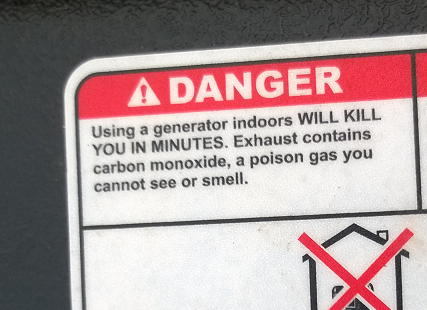
The more prepared people in town used generators to keep the electricity flowing. My father-in-law was able to reserve one before all the food in his refrigerator spoiled. He needed my help getting it to his house. While we tried to figure out how to make the thing work (which took much longer than it should have for people of our intellectual abilities), I couldn’t help but notice the Danger sticker:

Danger Copywriting

This is the sort of warning I usually ignore (I am a man, after all…), but I couldn’t dismiss this one so easily. The message was too strong.

“Using a generator indoors WILL KILL YOU IN MINUTES…”

Tell me those words don’t hit you right in the gut. I was shocked by their power — and inspired at the same time. The copywriter hired for this project was pretty darn good!

No Good Excuse for Wimpy Sales Messages

A danger sticker like this one covers a lot of ground, and it only takes two sentences. I see four big reasons why those twenty-one words make such a strong impact on the reader.

1) Unambiguous meaning. There is no question what’s being said. No alternative interpretations are possible. Clarity and specificity create vision. If you don’t heed the warning, you know exactly what’s going to happen.

Are your sales and marketing messages THIS clear? Do you address the problems your potential client is facing this plainly? Are the benefits of your product/service laid out this specifically? Are your calls-to-action simple to understand and easy to follow?

2) Tangible results. The label leaves no doubt about what will happen is you don’t pay attention to its warning. Anyone who reads it knows precisely what he’s dealing with.

When promoting your product, do you leave prospects wondering what’s in it for them? Do they have to put the pieces together themselves? Does your message talk about YOU or the buyer? Do you describe the physical components of your product or the specific ways it will change the customer’s life?

Again, clarity and specificity create vision.

3) Forceful language. Some people may call this kind of language hype or sensationalism. But it’s not that at all, is it? It is a matter-of-fact statement of impending danger. The cost of disregarding the warning is high. Using strong language in this manner is the responsible thing to do.

All sales messages should contain a measure of warning. If you truly believe what you’re selling can help your customers, there’s a little bit of danger if they don’t take action. They’re going to miss out on something good…or experience something bad. You are duty-bound to help them see that.

If you solve a big problem, remind your listener/reader how serious the situation is. If it’s more serious than he knows, educate him.

On the other hand, if you have a bold promise that you can deliver on 100%, don’t water down the message. There’s no better way to get ignored and forgotten than to under-promise. (You will probably never get a chance to over-deliver.)

4) Appeal to existing desire and fear. In this case, the desire to stay alive and the fear of death. In the case of the generator, undetectable poison gas is a genuine concern. It is not fear-mongering to warn people of the risk.

What is it that your potential clients desire that you can help them get? What problems that they’re afraid of facing can you help them eliminate? Those should be major components of your message.

Did I Say Duty-Bound?

I said it and I meant it.

If you provide a product or service that improves people’s lives, and if you care about people, doesn’t it make sense to actively persuade them to purchase your product or service? Doesn’t it also make sense that you remove every possible barrier that may keep them from buying from you?

Selling makes sense.

As I said in a recent newsletter, “selling is not putting external pressure on people. It is creating circumstances where targeted prospects feel internal tension caused by the disparity between where they are currently and where they want to be. A strong sales message heightens that tension as the listener feels the desire to take you up on your offer.”

Selling isn’t something you do to people. It’s something you do with people.

You can tell I’m pretty fired up about this topic. I believe that a majority of business owners and service providers, especially those who primarily operate online, need to re-think the way they sell. I also believe that a smart approach to selling will revolutionize their businesses.

For that reason, I’m starting a training program in January to help entrepreneurs, marketers, and salespeople

  • discover why your should-be customers turn you down
  • overcome their natural resistance and
  • sell actively without being obnoxious.

I’ll share more details soon.

Enjoy the last moments of 2014!