What Really Makes Your Customers Tick (Here’s a Hint)

Robb Report’s December issue shared a study I found utterly fascinating and a little surprising.

You will find it instructive…as long as you don’t let a few caveats distract you.

Every other year, the U.S. Trust does a survey of high-net worth households to learn about their charitable giving.

In addition to how much they donate and what organizations are raking in the biggest piles of cash — which is also both surprising and instructive — the survey tried to uncover the motivations behind it all.

The results shines a unique light on what drives people to make the decisions they do.
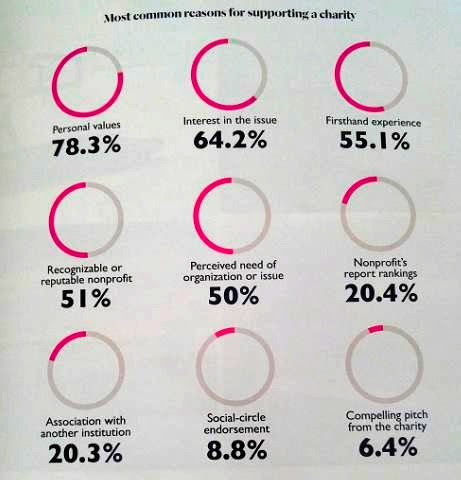
Here’s a quick summary of key findings that give us insight we can apply to our emails and other persuasion efforts:

1) By far, the top reason cited for making donations is the alignment of the cause/organization with their personal values — more than 12 times more than a good sales pitch. **

2) In fact, a compelling pitch is the least influential cause mentioned in this survey.

3) The top 3 reasons are all about the giver, not the organization, cause or even the perception of need.

(Which is part of the reason Stanford University’s endowment receives more funds than St. Jude’s Children’s Hospital by a wide margin).

Takeaway: It is extremely important for you to gain an intimate understanding of what really matters to your audience. Self-identity is the core from which decisions are made…and the lens through which we all see the world.

4) Association with another institution (affinity, endorsements, joint ventures) is an open door to influence.

5) Giving your would-be donor/buyer first-hand experience of what you’re doing and why you’re doing it is a powerful way to shift his perspective in a favorable way toward your business, organization or cause.

Caveats (for those who’d like to quibble):

a. Donations and purchases aren’t the same. And the motivations for giving huge gifts may be different than for small ones.

b. Millionaires may be different than non-millionaires in many ways. So these takeaways may not transfer directly.

c. Surveys are flawed because responses may not be entirely honest. People answer in ways that are flattering to themselves and supportive of their self-image.

d. Compelling sales pitches are definitely more persuasive than this survey indicates. Or at least they can be.

How do I know? Because a good sales pitch communicate the alignment with personal values, makes the donor aware of affiliations and paints the picture of need.

** In my experience, people often underestimate the impact of a well-structured sales pitch. When they make their emotional decision and justify it with logic, they’re often hesitant to admit they were won over by a pitch. They’d prefer to imagine they discovered something that lines up with what they were already thinking of doing (which, of course, is what a good pitch does).

— — —

TD;LR…

People make decisions based on their personal values and their self-image more than any other factor. As an entrepreneur and marketer, you must discover those values you share with ideal clients and align your offer with those values.

Or find someone who’s already actively looking for what you sell.
Kobe Bryant’s Triangle Offense of Copy

The LA Lakers retired my pretend cousin’s jersey last night.

Actually, they retired two jerseys for the two numbers he wore while he played.

Here’s a little trivia for you.

In addition to Kobe’s legendary basketball career, did you know he’s also started and sold an advertising agency… directed many of the Nike commercials he starred in, and is now involved in all kinds of marketing activities for his own company and others?

Yep.

Kobe is likely to go down in history as a Hall of Fame athlete and ad man.

Earlier this year, he spilled the beans on his Triangle Offense of storytelling and copywriting. I’ll let him tell you in his own words:

—–
“The product and the messaging must be one and the same, right? It’s like a triangle approach I take with all storytelling…

1) What is the essence of the product? What is the product here to do? What is the messaging that we want to represent?
2) How can we best communicate that plainly and simply?
3) And thirdly, how do both of those things relate to human nature as a whole?

If those three things align, then I know we have the right messaging.”
—–

It’s hard to beat that simple formula.

Get down to the core, emotional benefits. Share those benefits with clarity as they related to human nature and psychology.

The only thing I would add here is that you can go beyond general human nature and address the specific nature, dreams and desires of your specific target audience.

Of course, Kobe knows that. He just didn’t say it in this interview.

Homeless Folks Need Netflix, Too

That headline sounds like an exaggeration. Or an outright trick.

But it’s 100% inspired by real-life experience.

I have a relative that recently lost his job, fell behind on rent and got kicked out on the street. (Incidentally, this is the second time that’s happened in the past year.)

He started a new job and he asked me to lend him some money to get to work until payday.

To show his appreciation, he offered me access to his Netflix account.

Yep.

He has the premium plan that lets you watch HD programming on 4 screens… but he doesn’t have a place to live.

Get this: when he got his first paycheck, he couldn’t pay back the money I lent him because he had to pay the Netflix bill!

Now…

I understand. Entertainment is important to everyone, regardless of their living situation. But isn’t it interesting how much of a priority it has become?

First World Problems, right?

Here’s the email marketing lesson:

Entertainment is one of the easiest things to “sell” today.

Think about it. When have you ever seen a hard pitch for a Hollywood blockbuster?

The promise of a good time…a temporary escape from reality… is enough to make people part with their money — even when they can’t pay their other bills.

If your emails (and all your other marketing communication) don’t include some level of entertainment and fun, you’re making it that much easier for your readers to ignore you.

You’re undoubtedly leaving money on the table, too.

Emails That Make Sales (now defunct) can help you get out of that rut and add some personality and fun into your emails. And make some sales, too.

Remember, repaying loans isn’t fun…and neither is reading “just the facts, ma’am” emails.

Add a little Hollywood and see what happens!

Do Your Readers Have Goldfish Attention Spans?

People’s attention spans are shorter than ever… or are they?

So-called “experts” report that human attention span is shorter than that of a goldfish. So how do they explain that millions of people regularly spend 90 minutes watching a movie… and even longer reading Harry Potter books (which could be measured in inches instead of number of pages).

What’s really going on here?

I recently shot a video to explain why attention spans APPEAR to be shrinking and, more importantly, I several suggestions for overcoming this obstacle, including:

  • what your readers absolutely will not stand for when reading your emails… which is one of the reasons people ignore 90% of the messages that land in their inboxes
  • 4 strategies that keep an audience hanging on every word you share — 3 of which almost no one is telling you about
  • what you have to stop BEING in order to move up the ladder into “Approachable Expert” status and keep readers from tuning you out.

This was a livestreamed video; that will become obvious when you watch. I think it’s pretty good, though. And you can put these ideas to work right away and start increasing the length and quality of attention you get from your list.

By the way, a recent analysis of billions emails by Litmus Email Analytics shows that email attention spans actually INCREASED by 7% between 2011 and 2016. Kinda goes against the prevailing theory, doesn’t it?

Just in case you’re not big on watching videos, let me break down the 4 strategies I talked about.

1) You have to spend more time talking about IMPORTANT and INTERESTING things. Not important to you, necessarily, but important to your reader.

We all love talking about ourselves, but readers need to see how what you write benefits them.

2) Commit to telling more stories. People love hearing stories. As long as they’re not drawn-out and boring, people are more than happy to sit and listen. Much longer than they’re likely to read raw information.

Naturally, you still have to tie your stories back to what’s important/interesting for the reader.

More details are better. More emotions are better. More sensory information is usually better.

Help the reader feel like he was really there.

3) Become a personality. Show off your unique characteristics. Be likeable. Be despicable. Just don’t be boring.

We all form bonds with people we spend time with — even if we never meet them in person. Psychologists have a term for that: parasocial relationships. Think about it. You probably feel a little bit like you’re friends with your favorite TV characters. You almost believe that you know them. You definitely empathize with them.

You can achieve the same kind of connections with your audience. But you have to put your personality on display.

4) Demonstrate the points you make. Offer proof (or at least evidence) that what you’re saying is true. That you’re the real deal.

Now, go forth — win and defend the attention of your email list.

Should You Use Shame in Your Copy?

I rarely feel embarrassed, but this got me.

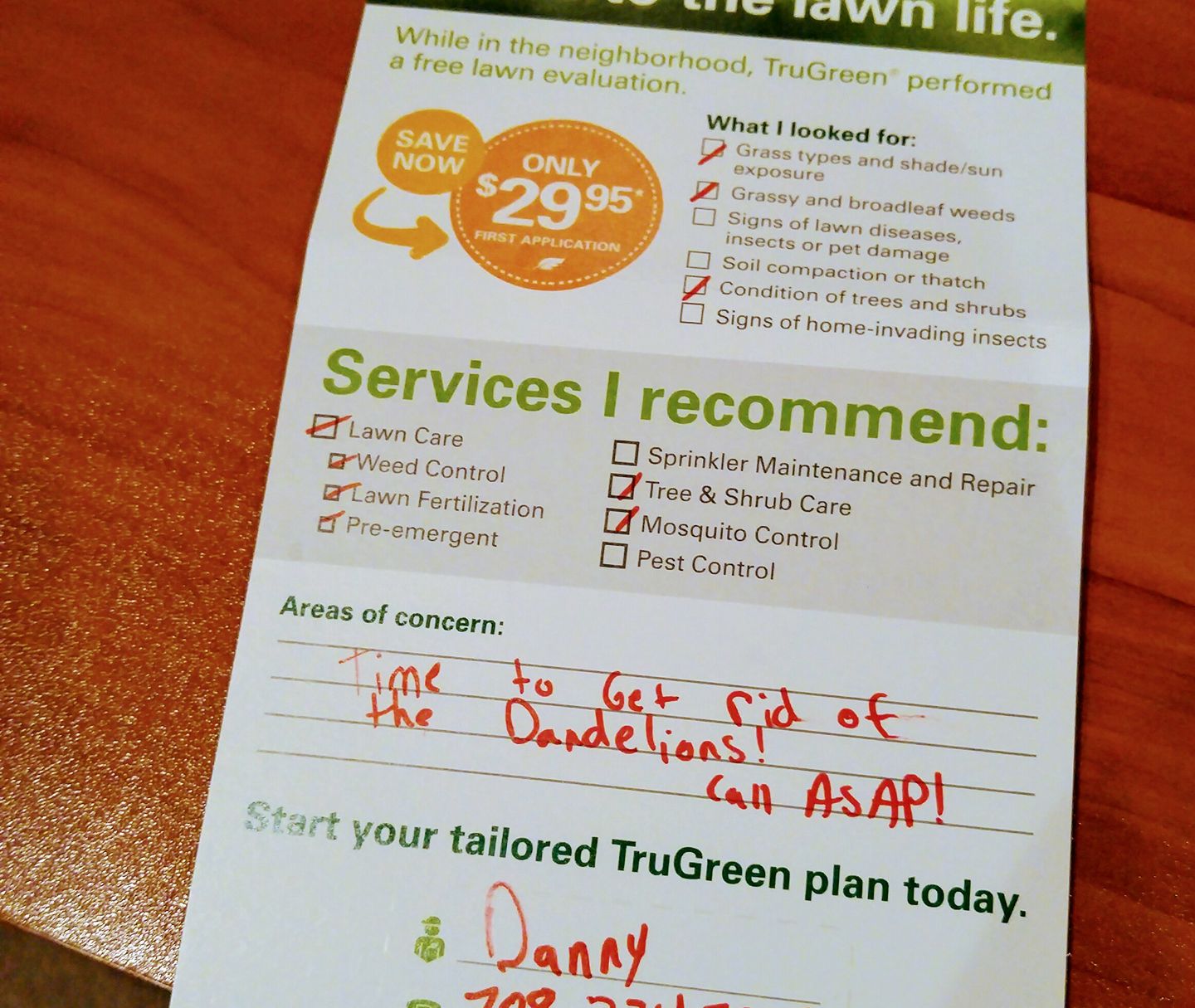
After running around town with my family the other day, I came home to find a lovely note hanging on my door…

Apparently, one of my neighbors uses TruGreen, and while Danny was making that lawn beautiful, he wanted to tell me how bad mine looks.

It stings a little.

I’m all about taking responsibility, but it’s NOT my fault the weeds are out of control.

You see, I’ve been paying a lawn maintenance company since last summer. Weed control is their job. So it’s frustrating to have another lawn care provider tell me I’m paying for a crappy job.

Will TruGreen get my business because of this door hanger? No.

But it may be the straw that breaks the camel’s back, that camel being my resistance.

Here’s the lesson you can use in your sales copy:

The right message delivered at the right time is critical. But if you’re counting on a single shot to make the sale, you’ve stacked the odds against your own selling success.

TruGreen has been sending me direct mail since 2010. They’ve bragged about being keeping PGA golf courses looking pristine.

I’ve never considered hiring them because one relative’s bad experience.

But they keep showing up, looking professional… and I can’t help but wonder if that one burnt lawn was an anomaly.

Then they hit me with the “free lawn evaluation” and the door hanger diagnosing my grass’ disastrous condition.

Now I’m seriously considering making the switch.

Moral of the story: fortune is in the follow-up.

Give Your Copy the TruGreen Treatment in 6 Easy Applications

1) Sell what people already know they need or desperately want

It’s easy to push our thing onto people who think/know will benefit from it. That’s not really how selling works.

Go to an audience who wants the result you provide and half of the job of selling is already done!

2) Apply social pressure

“While in the neighborhood…” on the door hanger really means “I couldn’t help but notice that dandelions are dominating your lawn. Your neighbors probably notice, too.”

Telling your prospects that people are judging them is a low blow. But it works like crazy.

If you’re committed to helping them get the results they need, prepare to pull out all the stops.

3) Hit the pain points

If the TruGreen sign talked about making my lawn glorious, I would’ve ignored it. Pointing out the (obvious) problems grabbed my attention and forced me to consider a change.

4) Get specific

I knew my yard had more weeds than high schools have hormones. Still, the door hanger’s detailed breakdown adds credibility and helps me appreciate the severity of the situation.

5) Get personal

See Danny’s handwritten note.

6) Use “free” to get your foot in the door

That free lawn evaluation gives me an easy, low risk way to get more information. And for TruGreen to make a full-on sales pitch.

How are you offering free value to start conversations with your should-be buyers?

Being first is good. But you can still make a fortune cleaning up the mess other providers leave behind.

Work on getting your message right and keep presenting your unique brilliance to the right people. Incumbents get tossed out on their bums all the time.

Controversial Advice for the Smartest Guy in the Room

There’s a common piece of of wisdom that says

“If you’re the smartest person in the room, you’re in the wrong room.”

It’s really BAD advice.

Firstly, it doesn’t even make sense. No matter what room you’re in, SOMEONE has to be the smartest person there. The instant that guy or gal leaves, the next smartest person takes the top spot. Which means now he’s in the wrong room, right?

Secondly, there are countless areas to be smart in. Should a nuclear physicist leave a business mastermind group filled with college dropouts?

Thirdly, the room where you’re “smarter” than everyone else is the room where you can help the most people. And get paid for it.

Plus, sometimes you just can’t help it. You’re too doggone smart. Maybe you’re at the top of the cerebral pyramid in most of the rooms you walk into.

It’s probably not a great idea to spend all your time looking for people to pour into you (which sounds selfish to me) instead of investing more time into building a solid platform on your brilliance.

Once you’ve decided to set up shop where you’re always the smartest person in the room — where you can help people live better lives (in whatever unique way you make that happen) — email is a darn good way to establish and maintain a relationship with those people… and move them to take the action required to reach their goals.

If your marketing doesn’t set you up as the smartest guy in a room other people are desperate to be in, you may want to re-think how you’re doing things.

Handle your business.

P.S. Humility really is a virtue. And it’s not polite to get “too big for your britches,” as Grandma says.

But “politeness” may be preventing you from realizing your potential.

Most people who reach high levels of success in business have sizable egos. It almost seems to be a requirement. It takes a full tank of confidence to chase after something big, something difficult…to believe YOU (of all people) could be the one to step out and make it happen.

It’s okay to be the smartest person in a room.

That said, go build your own room to make sure that’s usually the case.

The Only Place to Start Your Stories

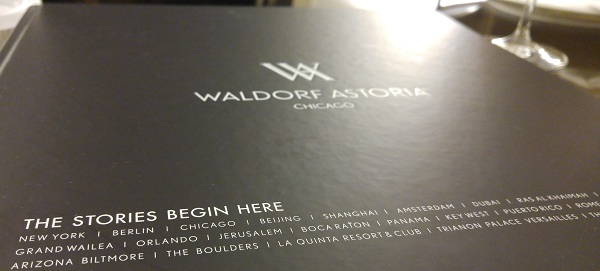
Stories Start Here Waldorf Astoria

Last week, I did a Facebook Live video explaining that all stories are not created equal. We talked about a story-based email sequence/landing page combo I just wrote that, in the client’s words, “murdered” the long-standing control. “Murdered” meaning “more than doubled sales.”

(If you’re not a member of the Email Copywriting Corner Facebook group, you missed it.)

Today I wanted to give you a little more insight into writing stories that sell. I’d like to illustrate with a fictional story that created a real-life story. Everything will come together at the end.

_____

Once upon a time in a land called Zamunda, a handsome prince left home to avoid marrying a woman his parents picked for him. The prince wanted to find true love for himself.

Before the king and queen “rescued” their son in the faraway city, they checked into the royal suite at the Waldorf Astoria…
_____

You may recognize this story as the plot of the Eddie Murphy movie Coming to America. When she was a little girl, Coming to America was one of my wife’s favorite movies (mine, too). And even though the Waldorf played a tiny role in the film, my wife dreamed of staying in a room at the storied hotel someday.

The dream came true this past weekend, after nearly 28 years of waiting.

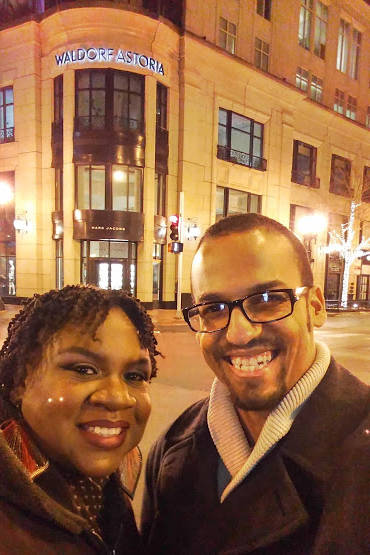
She woke up on the 15th floor of the Waldorf Astoria Chicago on her birthday.

Bryants at Waldorf Chicago

Where All Stories Should Begin

When you write emails with the ultimate goal of selling something (product, service or idea), it is critical that you begin with aspiration.

Getting a room at the Waldorf was one of my wife’s lifelong aspirations. The moment I learned about it, it became MY aspiration to make her dream come true.

Your reader aspires to:

  •     earn more money without abandoning his family 20 hours a day
  •     have gorgeous, healthy hair her friends secretly envy
  •     retire comfortably and ON TIME
  •     find true love without flying from Zamunda to some faraway land
  •     get rid of back pain without surgery
  •     …or whatever.

Connect – and connect quickly – with your reader by telling stories that tap into their specific aspirations. Yes, problems work too; people aspire to live without their struggles.

Your stories introduce them to a world where their aspirations can be realized…make it seem eminently possible and even easy…with the help of your product or service of course.

No hard-selling necessary.

Science of Copywriting: Blab with Lamar Tyler

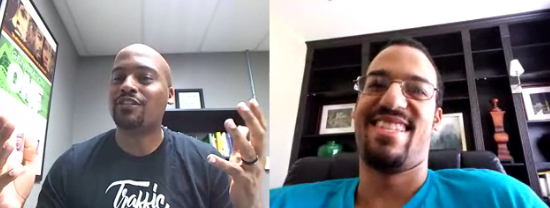
Copywriting Blab with Lamar Tyler

For me, Lamar Tyler is one of my top answers to the question “If you could spend an hour with one person/celebrity, who would it be?” I have a TON of respect and admiration for Lamar’s business acumen, leadership and brilliance. Plus, he’s one of the coolest guys you’d ever want to meet.

Last weekend, I got my hour with The Man.

Lamar hosted the inaugural Traffic, Sales and Profit Lunch and Learn series on Blab, and I had the honor of being his guest. We discussed a lot of topics close to my heart, like:

  • What is a unique selling proposition (USP)?
  • How do I make people want what I sell?
  • The differences in writing emails, landing pages, general web copy, etc.
  • The most painful mistakes people make when writing copy
  • When it’s time to hire a professional copywriter
  • “Why can’t I find a good copywriter?”
  • and plenty more.

I also revealed the most powerful characteristics of email copywriting — and why some people should NOT hire a copywriter to write their emails for them. (I’ve told potential clients on multiple occasions I couldn’t do better than what they’re doing.)

Check it out: The Science of Copy Lunch & Learn

An Important Point I Didn’t Get to Make in the Interview

I realized after the Blab that I forgot an significant point when we talked about why it’s sometimes difficult to find a good copywriter. If you’re expecting a stranger to instantly create a miraculous transformation of your business, you might be expecting too much.

Your copywriter isn’t (necessarily) weak just because he can’t make your boring offer exciting…or make a dead mailing list suddenly spring to life.

I’ve often quipped that I do work miracles, just not on demand. (Yes, I’ve said it to potential clients.) Even copy that seems brilliant doesn’t work 100% of the time. Believe me, I know from embarrassing experience. All of the pros have. For optimal results, you have to make the right offer to the right audience at the right time.

On the other hand, a great offer or a hot list can make even a pedestrian copywriter look like a superstar…

Resources mentioned during the conversation:

Lamar’s Traffic, Sales and Profits private Facebook Group

Bencivenga Bullets

The Gary Halbert Letter

Sprint Stole Verizon’s Spokesperson. So What?

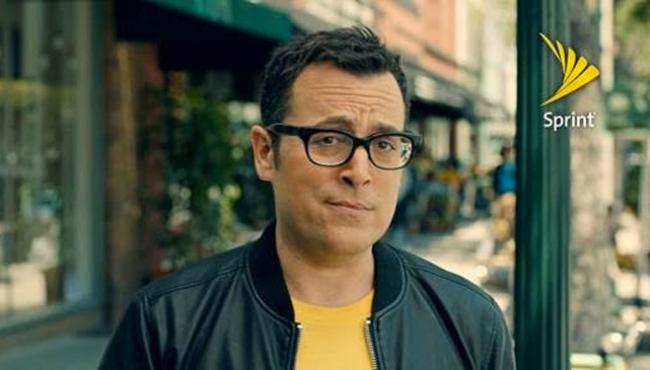
Sprint Marketing

You almost have to give someone at Sprint a standing ovation for their recent advertising campaign featuring your Verizon’s “Can you hear me now” guy, Paul Marcarelli.

It’s the advertising equivalent of a judo hip toss.

Verizon is the big bully with more than 2X Sprint’s subscriber base. A lot of money was spent to make Marcarelli the face of the company (as well as the butt of their jokes). Now underdog Sprint is using Verizon’s own “brand equity” against itself.

One of the cleverest advertising coups in recent memory.

I’m convinced these campaigns won’t save Sprint’s sinking ship. I’m also convinced YOU can profit by studying what’s happening here.

Here’s What Sprint Did Right

The commercials are attention-grabbing. The first time you see THE Verizon guy playing for the other team, it’s nearly impossible to ignore.

  • Your brain has to try make sense of it
  • There’s controversy: what made Marcarelli go Benedict Arnold and switch to Sprint? (Turns out, it’s not call quality)
  • It’s funny in an “Oh no he didn’t” kind of way

It’s critical to hold your audience’s attention long enough to tell them what they need to know. That’s what gives you the opportunity to generate interest and desire.

There’s no rational reason for it, but “celebrities” almost always bring a level of trust to the products/services/brands they’re attached to. Over time, spokespeople can become (niche) celebrities and garner familiarity, likeability and trust.

At Halloween, Flo from Progressive is more popular than Dracula.

The ads are also focused on a value proposition: 50% cost savings. That seems to be the only thing Sprint has to offer…

Why It Won’t Make a Difference

— Sprint provides inferior service.  They’re even admitting that fact in these commercials.

Even if this advertising campaign effort brings in a lot of new subscribers (Q4 projections indicate otherwise), the business loses big time when people cancel their service due to poor quality service. This is a long-time problem Sprint hasn’t fixed.

— No one wants the 50% Off plan. Sprint’s CEO has stated the company will probably stop promoting this low-priced plan in the near future. Potential subscribers are looking for features they can’t get at that price.

The profit margins on this plan are so thin that they virtually guarantee a continuation of low-quality service in the future.

Quick Takeaways That Will Make a Difference for YOU

1) Provide great service. Or team up with/outsource to someone who can deliver great service where you’re weak.

2) Find out what your target market wants and offer it to them — in a way that highlights the benefits valuable to THEM.

3) Set your prices at a level that empowers you to a) offer great service and b) invest back into your business. You can discount yourself right out of business!

You don’t have to have a million dollar marketing budget to put those ideas into practice!

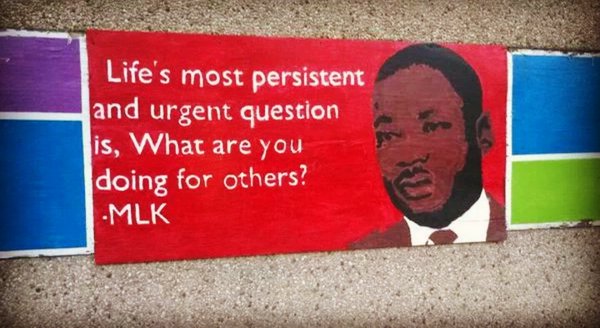
Life’s Most Persistent Question

Martin Luther King marketing

“Life’s most persistent and urgent question is,
What are you doing for others?”

Here’s a corollary: are you persistently offering your uniquely valuable brand of help to people in your marketing

People visit your website or brick & mortar store looking for something. They sign up for your mailing list because they need your expert insight and help with something they’re dealing with

Your emails are helpful. Your offers are helpful

Are you holding back?

Chances are, you’re not reaching out to your prospects, current or past customers enough. They need your help and you’re not offering it to them.

What would Dr. King say about that?

Here’s what I suggest:

  • Clarify my appreciation of your unique value and your understanding of your audience’s needs and desires
  • Confidence develops as a result
  • Commit to being a leader for your tribe, even when you feel like Moses in the desert…
  • Communicate like a leader, consistently and as compellingly as I can